GHOST VILLAGES AND A POIGNANT WALK OVER A SILENT LANDSCAPE
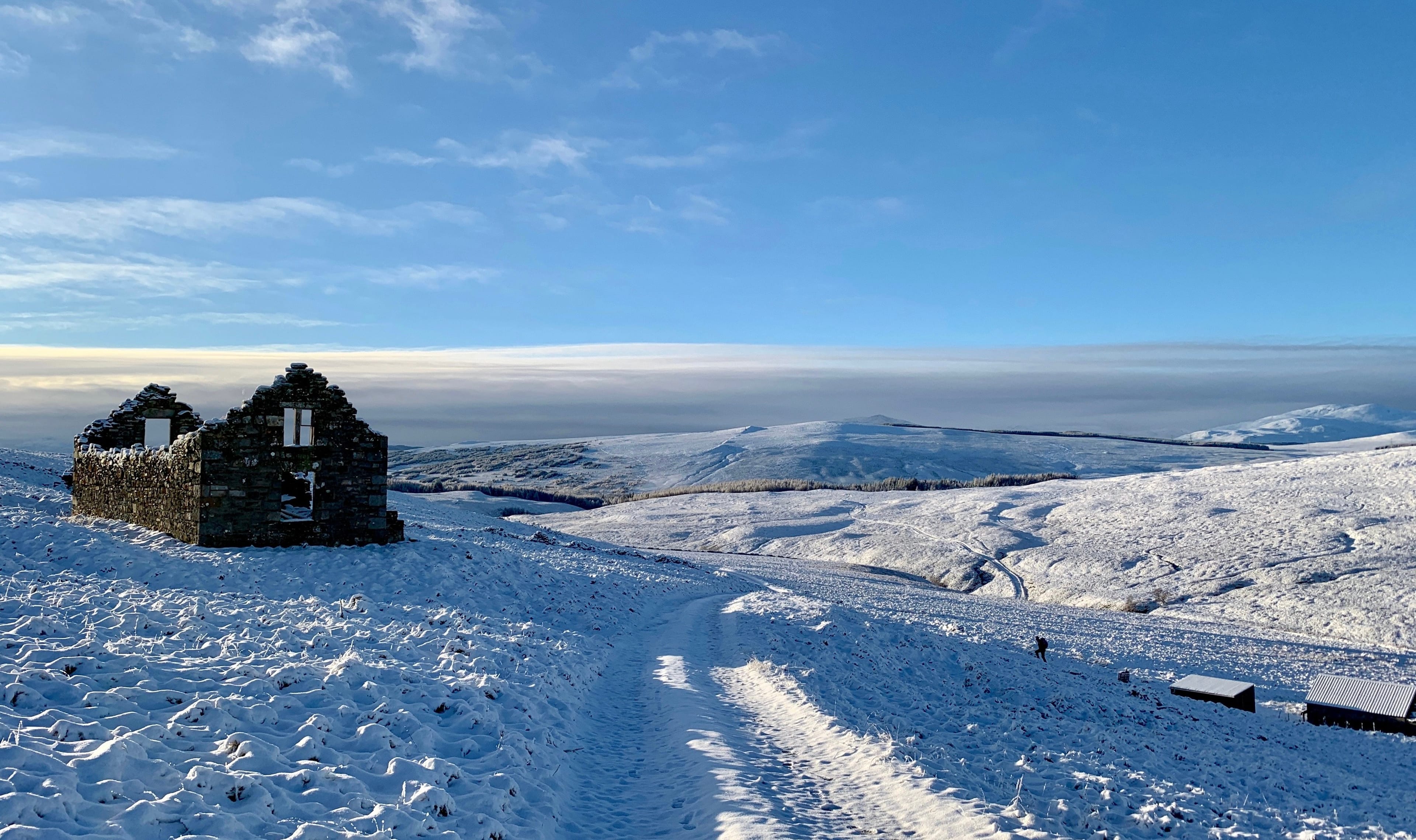
LONG GONE: A few scattered skeletal remains are all that's left of the villages of Ruighe Chail above the Dalnamein Forest
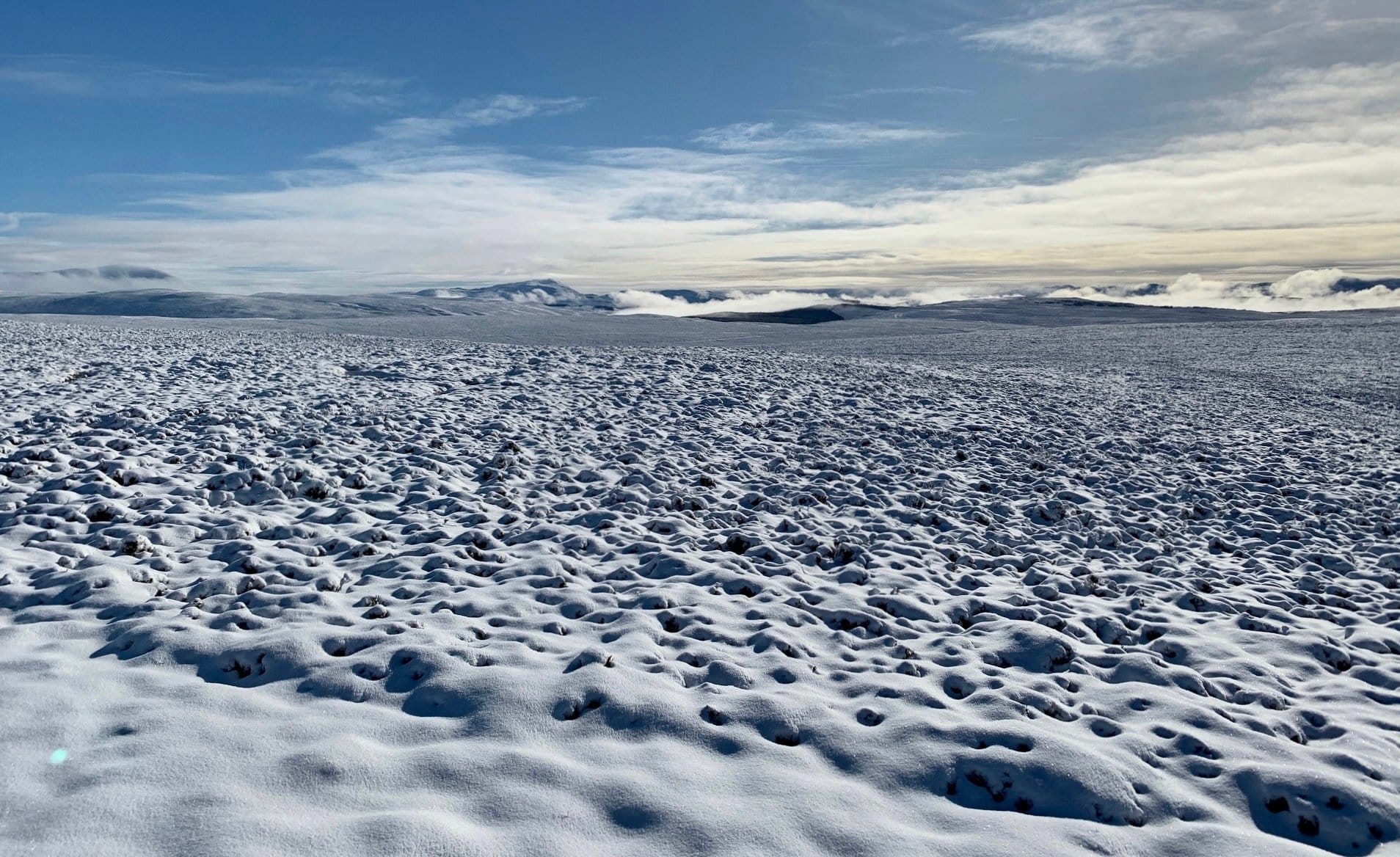
THE BIG EMPTY: Heading east
THE reminders of past lives are everywhere in our hills and glens and it is always a poignant moment when you turn a corner and catch sight of the ruins of a once thriving community.
The ghost villages of Ruighe Chail in Dalnamein Forest seem more affecting than most, possibly due to the feeling of utter desolation of the surrounding terrain despite the fact they lie just a couple of miles off the busy A9 where the traffic rushes past obliviously.
The original settlement dates back several centuries although the ruins that sit on the hillside are mostly from the Victorian era. Only the walls of the more substantial two-storey buildings and byres remain including those of the former Glas Choire Lodge.
The bleak landscape of bare rolling hills and empty, seemingly unending, moorland evoke images of a hard existence that is almost impossible to comprehend today. Apart from the odd bird call, there is an eerie silence and it's no surprise to find a haunting ambiance when walking amongst these remains.
The walk is handy for those looking for a leg stretch to break longer journeys, but there are numerous options to extend the day, the best being the traverse east across a series of lonely glens to emerge at Bruar. This is not a recognised or naturally linked route, simply one of those pieced together by studying the maps and working out the best way across. And there are a few surprises along the way.
The first sighting of the ruins comes as the inward track dips towards a modern bridge over the waters of the Allt Glas Choire. The skeletal remains of an older bridge can be seen further downstream.
The buildings are scattered off the slope of Druim Ruighe Chail: 'druim' is ridge, and 'ruighe' is slope, but 'chail' is a little more obscure. It could be derived from 'mothachail' which can mean aware, sensible or observant, referring to the lofty location looking down the glen. Alternatively it could come from 'cail', a catch-all word meaning thing, so something on the slopes of a ridge. Either of these descriptions would fit the setting.
The lack of trees may also suggest that 'forest' is a misnomer, but like so many of the marked deer forests, this area would once have had wide-ranging tree cover. Further in and concealed within the folds of the landscape sit a few old watchers' bothies, their purpose being so the estate could keep an eye on the movement of deer and to deter poachers.
One of these is curiously known as Loch Treig Bothy despite being nowhere near that body of water. The name comes from the story of a shepherd who was said to have spotted a strange sheep in his flock and subsequently walked more than 50 miles to return the animal to its owner.
There are old shielings and field walls spread in every direction and tracks running north and east offer longer walks provide the opportunity to explore. There are also plenty of summits to aim for, although once off the tracks the going is much tougher on some unforgiving ground, especially when wet or under deep snow cover.
The Corbett pairing of An Dun and A' Chaoirnich sit to the north-west above the southern narrows of the Gaick Pass but reaching them from here is a mammoth endeavour over some wild territory and they are better left for another day with an approach from Dalnacardoch.
The onward journey east over the bleak terrain is helped by sections of track but there is also a lot of rough ground to cover. It's a landscape that sees few visitors other than stalkers and estate workers and in poor visibility it can feel oppressive, enough to have you second guessing at times with navigation. But that bleakness is also its beauty and its fascination, and every so often there's the delight of stumbling upon a hidden shelter or long abandoned cottage. The biggest surprise comes on arrival at the deep cleft of the Allt a' Chreachain. The small dam over the water is modest but the long metal stairway which drops down the steep face to reach it is quite breathtaking, an attraction in itself. It looks like something you would find in a gorge in China.
A scramble up the slope on the other side leads to another pathless push over rough terrain where the better option is stay high to avoid wet feet or having to pick your way through an ice sheet. After passing another welcome shelter, there's more featureless ground to cover in Gleann a' Chrombaidh to reach the old cottage of Cuilltemhuc.
The single storey building stands intact above the water of Bruar although it is locked and boarded up. Cuilltemhuc translates as the pig's nook and it's not hard to imagine wild boar roaming this windswept corner. The view from the house stretches all the way up Glen Bruar to the Munro summit of Beinn Dearg.
One of the former residents was known as the 'laughing man of Cuilltemhuc' due to the fact he was said to have often been spotted sitting naked in a water trough laughing his head off. No reason was ever given for his behaviour although it is suspected an illicit still may have been involved.
The finishing stretch involves a crossing of the Bruar. The stone stumps of a former bridge stand like ancient sentinels, and on paper this wide stretch of water looks like it could be a problem, but its consistently low level – mainly due to siphoning off further upstream for hydro purposes – mean that even in the wettest weather its easy to find a way over with dry feet.
Once on the other side, old boundary walls of field systems and shielings dot the landscape, including the remains of a former farming settlement at Ruichlachrie before the northern edge of the Glen Banvie Wood is reached. A drop through the trees leads past the Falls of Bruar, where the thunder of the water is an awakening from the silence of the traverse and the ghosts of the past.