WHY RUM IS MY FAVOURITE SCOTTISH ISLAND OF ADVENTURE
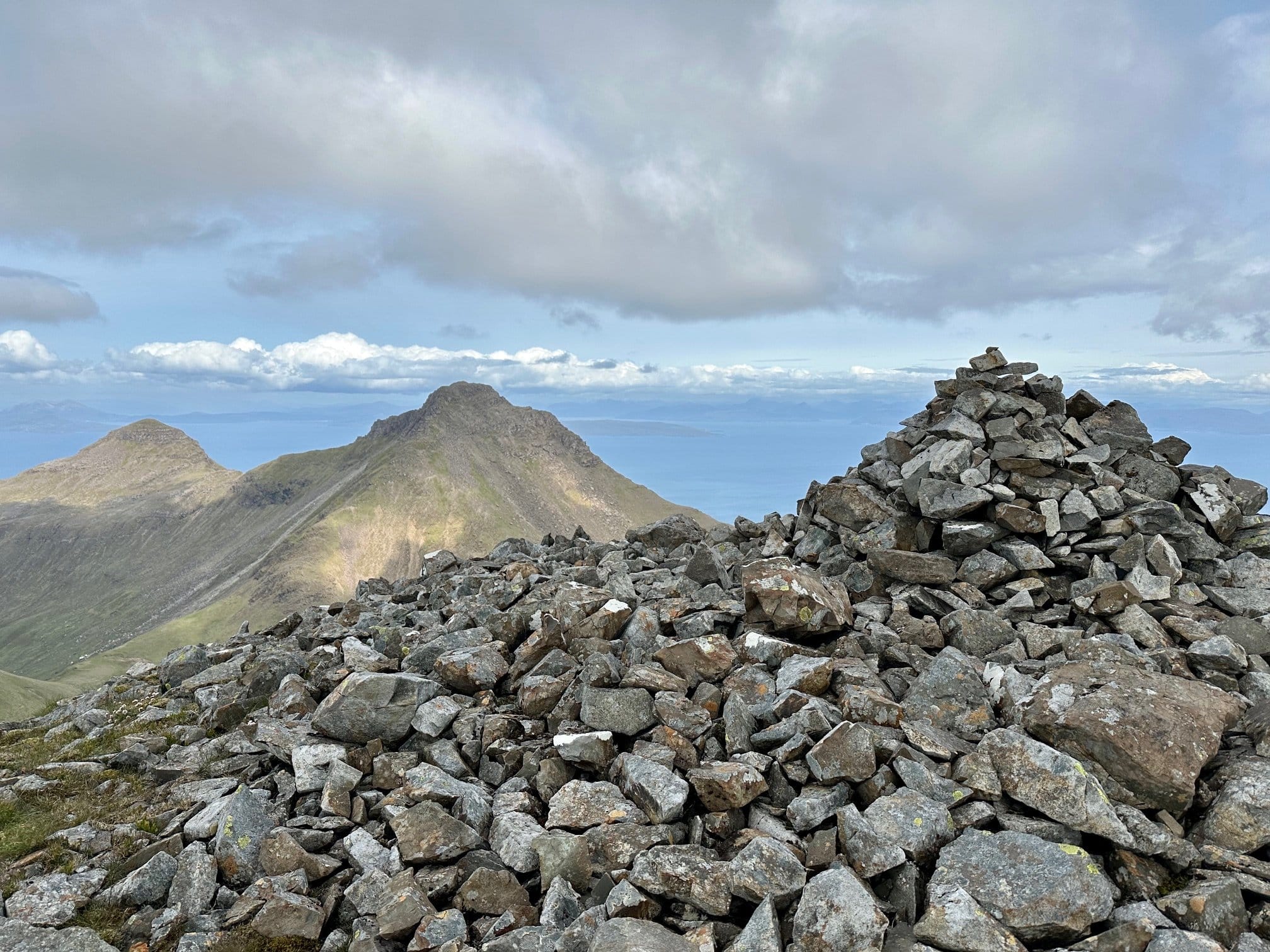
PEAK PERFECTION: The summits of Hallival, Askival and Ainshval all in a row
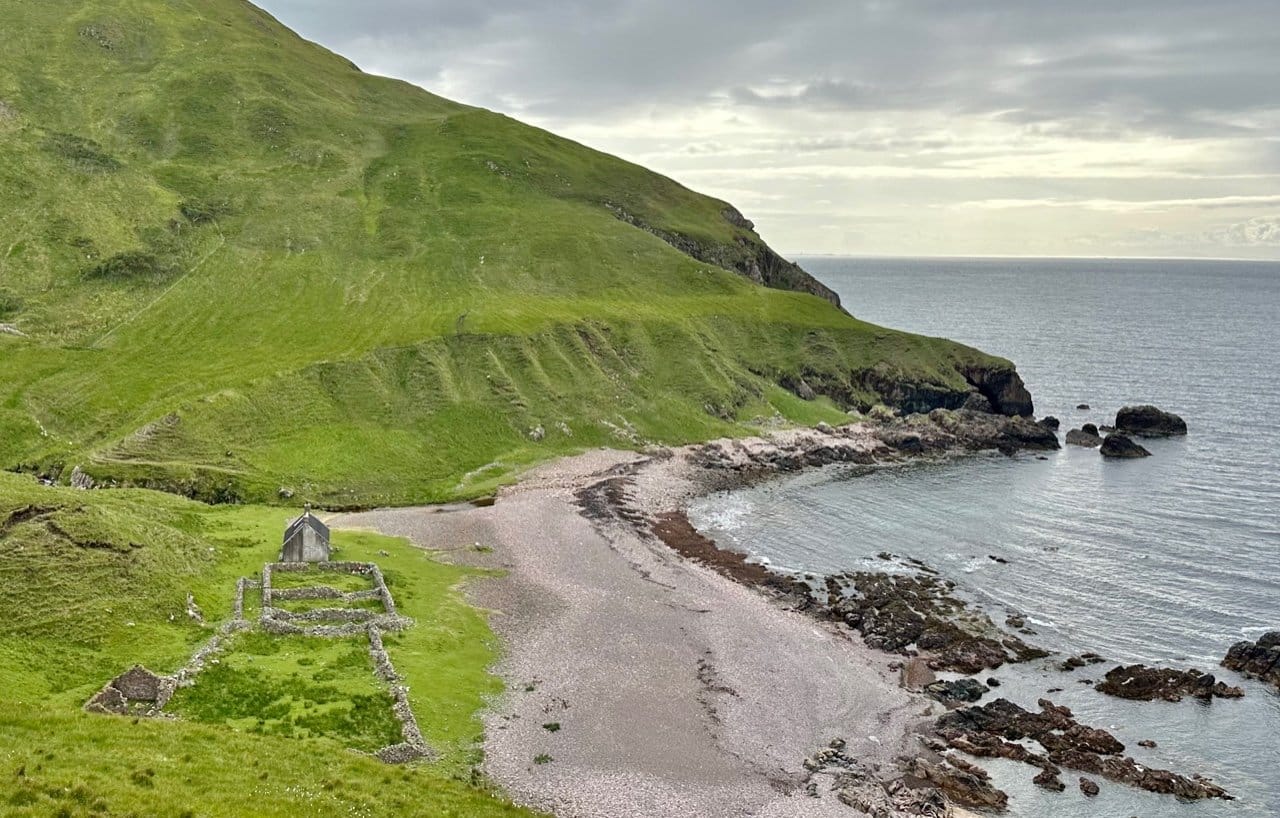
BEAUTY SPOT: Lonely Guirdil bothy
ISLAND hill trips always have that extra touch of spice, but Rum is top of the menu when it comes to a voyage of the imagination.
Everything about it feels rudimentary and stripped back: the basic ferry which makes the short crossing, the mountains which seem to soar straight out of the water, the rugged, empty and sparsely-populated terrain.
On a clear day from Mallaig, you can see the hills on the distant horizon. The closer you get, the more they swell and dominate the seascape to the point where you find yourself almost cricking your neck looking up in awe as they tower intimidatingly over the boat.
When the cloud is down and the grey of the sea and sky are welded together, it's easy to feel you are in a 1930s black and white film, a traveller on an old tramp steamer about to encounter Skull Island – the legendary home of King Kong – looming out of the mist at the last minute.
As with previous visits, we didn't encounter a giant ape hiding away in the heart of the island, but we did catch sight of the biggest goat I've ever seen. There are large groups of feral goats in abundance, but King Pan was standing alone and aloof halfway up a rocky slope surveying his kingdom. He didn't seem the slightest bit concerned by our presence.
The human population of the island is around 40 and is mostly scattered around the shores of Loch Scresort, but in the late 18th Century it was home to more than 400. Overcrowding and extreme poverty played into the hands of the then-owner Lachlan MacLean who helped arrange the clearance of 300 souls to Canada and the USA then leased the emptied land for sheep farming.
He was just one of a series of indifferent and/or unscrupulous characters into whose hands the island passed after being acquired from the Norwegian Crown in the mid 13th Century. In 1888 the Lancashire MP and mill owner John Bullough bought Rum as a sporting estate and holiday retreat. Three years later his eccentric son George inherited then spent fortunes in the construction of the striking red sandstone Kinloch Castle.
The project was a prime example of Edwardian extravagance: alligators and turtles in heated tanks, hummingbirds and birds of paradise in the conservatory, grapes, figs and peaches grown in glasshouses. No expense was spared for guests who were brought by private train to Mallaig to meet yachts which transferred them from the mainland.
For the construction, he brought in stonemasons from Lancashire but insisted they wear kilts while they worked, even paying them a special bonus for tobacco to keep the midges away after they threatened to rebel. He also insisted that the name of the island was changed to Rhum, adding the 'h' as he felt the connotations with alcohol were unsavoury, a somewhat strange take considering the stories of decadent parties in the castle under his watch. George died in 1939 and the Bullough stewardship came to an end 18 years later when his widow sold the island to the government for £26,000. Thankfully, this also meant that the 'h' was dropped and the spelling reverted to Rum. Since then it has been a national nature reserve and an important centre for the study of red deer, but for many years access was still restricted with written permission required to visit.
Kinloch Castle, meanwhile, has fallen into a desperate state of repair. On my first visit in 2009 it was part museum, part hostel, complete with four-poster beds in some of the rooms. There was also a small restaurant and separate bar with a bell to summon the barman.
Ten years later and the hostel part had been closed but you could still have a tour of the castle and its wide range of exhibits. Now there's security fencing all around, ceilings collapsed and fixtures ripped out and the whole building is in danger of falling down. Every so often there's talk of someone stepping in to buy it but the knockdown sale price – at one point it was on offer for £1 – comes with a £20 million-plus renovation bill and it's looking less likely by the day that it can be saved from becoming just another iconic ruin. My previous trips had been simply to tackle the Rum Cuillin, one with an overnight stay and early morning start, the other a Saturday in and out to fit in with the ferries. And fitting in with the ferries is the key to any venture here. The timetable for the Small Isles – which also takes in Eigg, Canna and Muck – is so fiendishly complex that even Alan Turing would have been tearing his hair out trying to comprehend it. There is no consistency, no hop-on, hop-off facility.
Every day features a completely different schedule, the islands swapping round in a bewildering rota which makes it near impossible to link them with any certainty. And that's before you take the weather into the equation. When the storms blow – and this is an area which regularly bears the brunt of their fury – you could find yourself stranded on one island or another for days on end.
We had our fingers, toes and everything else crossed for our four-day visit, hoping the ferry would be able to sail over on the Friday, praying that it would be able to return on the Monday. Four days can feel like an eternity on Rum if the weather takes a dislike.
The build-up wasn't promising, the familiar western seaboard unsettled conditions in the days before we sailed, forecasts of more of the same for our stay. But our arrival in Mallaig was greeted by a breakthrough sun and the lively winds running out of puff, perfect conditions for the crossing.
With the light not fading until nearly 11pm, the mid-afternoon docking was an opportunity for those who fancied an evening leg-stretch to head out. I had my eyes on a wander out west to Guirdil bothy which sits on the shore looking over the Sound of Canna.
The joys of walking on Rum were instantly apparent, long, lonely miles with not another soul in sight apart from my two companions. The solid track gave way to a grassier than boggier version as the route climbed over a low bealach and dropped gently to the coast.
The shelter is tucked away in a quiet bay and doesn't come into view until the last grassy hump has been surmounted. Like Dibidil in the east, it's a former shepherd's cottage, constructed by the estate after the clearances. The tumbled walls and empty shells of the ruins which sit alongside are a poignant reminder of a community that once thrived here before the sheep.
It's a spectacular setting under the towering presence of Bloodstone Hill, a tranquil retreat in which to sit and look over to the isles of Sanday and Canna as the sun goes down, its waning power still managing to turn the water into a sparkling sheet of silver paper. The hillside behind us was occupied in great numbers by the goat tribe, the skeletal remains and skulls on the beach in front of the bothy testament to their regular occupation of this area. This boneyard also contained an abundance of bleached bones and antlers of deer and those of a long-departed whale.
There were a couple of sleeping bags hanging in the bothy but no sign of anyone else around and no indication in the log of recent visitors. We made it back long before the light disappeared, sated and ready for the circuit of the Cuillin the next day.
The weather had reverted to type next morning, grey and damp as we set off for the invisible heights, water running down the path and over our boots but at least we knew it would pass. By the time we hit the ridge the waterproofs were off, the sun was out and the remaining clumps of cloud were clearing from the tops.
We passed over Hallival then lunched at the summit of Askival, taking in the majesty of the surrounding vista. The descent through the rock bands was slow, the down side of walking in a bigger group of differing ability and confidence.
The realisation of the time lost saw the party split after the long drop to the Bealach an Oir, some choosing to head for the second Corbett, Ainshval, some for the finest peak on the ridge, Trollabhal, and the rest cutting short the ridge traverse altogether to head down Glen Dibidil towards the bothy. The prospect of the seemingly never-ending walk back around the coast was a major factor in this thought process – this was my third time yet I still wasn't fully prepared for the length and the effort expended. It starts off beautiful but quickly becomes tiring and even with the upgraded path work there's still enough bog to eventually wear you down. The finish line can't come soon enough.
We headed west again the following day, a lazier circuit taking in the lower pairing of Orval and Ard Nev, two summits which allow superb views of the whole Cuillin ridge stretched along the horizon. Our journey between the hills was accompanied by the plaintive but beautiful calls of a golden plover as we kept a keen eye on the skies, the threat of wetter conditions in the building cloud. That also curbed our enthusiasm for carrying on the extra miles down to the Harris Mausoleum, the impressive Greek-style temple, another example of the Bullough family's vanity expenditure. Pity, really. Since hearing the words Orval and Harris together, I couldn't shake the image of a third-rate comedian with his hand inside a large talking duck, so this could have been prime therapy.
We were right to cut short the route, making it back to base before the rain came on in earnest. The spell had been broken, but the odds are long on three decent days in these parts so we had to be satisfied with our lot.
We had also so far largely avoided the scourge of this island, the dreaded midge. They can be a nightmare anywhere, but the Rum variety has a particularly voracious reputation. It's like all the worst of the microscopic blood-suckers have been rounded up from all over the country and sent to an offshore penal colony. Once back at the hostel, it wasn't wise to linger outside.
The one exception to the closed-door policy was for our regular night caller, a lone mallard which turned up at the same time and tapped on the glass with its beak until it was allowed in. After receiving an oatcake with a cup of water, it toddled back out again.
We had planned to walk out to Kilmory Bay and visit the ancient cemetery on the last day but after riding our luck for three days, only a handful fancied braving the relentless rain. Like the majority, I had so far stayed dry and didn't fancy a soaking just before departure.
Our ferry wasn't scheduled to leave until 4pm so the morning was spent in the impromptu bar in the community hall next to the well-stocked and welcoming island store, a fine arrangement which had served us well over our stay.
There we hatched a plan to catch an earlier ferry even though it was only going to Canna and back. We could shut our eyes and imagine we were on a Mediterranean cruise while enjoying lunch and a drink or two.
When we returned to Rum a few hours later we had to get off to get on again so that the numbers all added up. Even then we had priority boarding over the ones who had braved the rain and were standing dripping on the quayside.
The ferry now went via the invisible isle of Eigg before we arrived back in sunny Mallaig, a mere six-hour voyage to cover a 45-mile distance, which included two dinners and more than a few liquid refreshments.
Three magnificent days from four on Rum is a winner in any book, three days which cemented its reputation in my eyes as the prime Scottish island of adventure.